
The two-day workshop in Warsaw, Poland, brought together decision makers and industry experts to discuss current business and project opportunities that support the advancement of nuclear energy technologies across Europe and the Eurasian region. The event covered market insights on the nuclear energy landscape and commercial and government financing available for nuclear energy deployment projects.
Poland faces Europe's energy challenge in its starkest form—still heavily dependent on coal and under pressure to secure stable, resilient, affordable. and clean energy. SMRs are a near-term, credible answer.
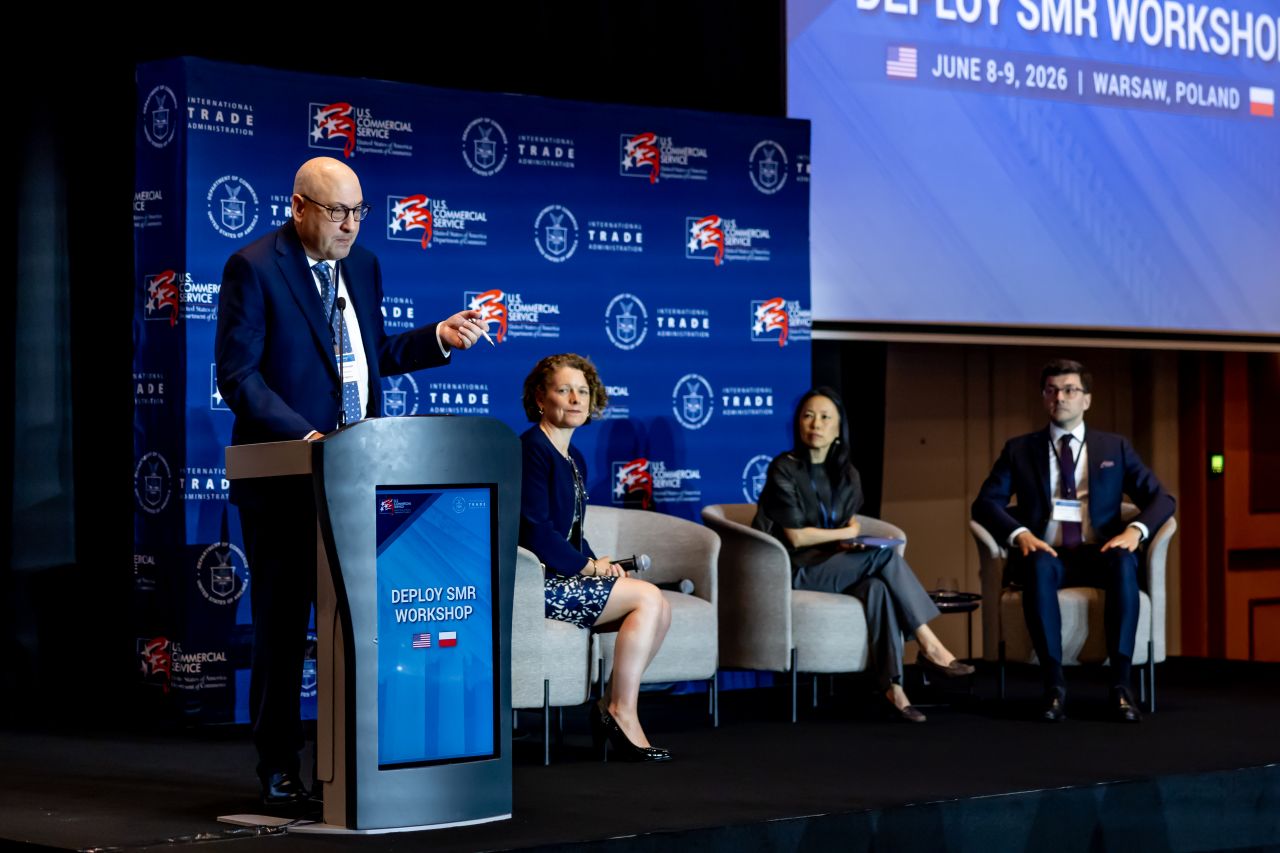
Kirsty moderated the financing panel because the bottleneck is no longer the technology—it is capital structure, risk allocation, and political will.
Her fellow panelists included:
· CeciliaTam, Head of Energy Investment Unit, International Energy Agency (IEA)
· Nick Sherman, Deputy Head of Division for Nuclear Technology Development and Economics, OECD Nuclear Energy Agency
· Piotr Charewicz, Senior Infrastructure Specialist, The World Bank Group
Five takeaways:
1. Schedule certainty is the primary financing lever—not just a delivery metric. Every year added to a construction schedule compounds financing costs dramatically. The case for standardization and completed designs before construction starts fundamental to not only to schedule certainty, but also investor confidence.
2. Standardization enables programmatic financing. Bespoke projects each reset the licensing clock and the risk premium. Lenders price each project as if it has never been done before—because it hasn't. "License once, build many" changes the financing conversation from project risk to program risk. That is a fundamental shift.
3. No single actor can deliver cost reduction alone. Government, regulator, vendor, EPC, and labor all have to pursue cost reduction simultaneously. IFI support is most powerful when it is conditional on that discipline.
4. Brownfield repowering is the most underutilized opportunity in CEE. Existing grid connections, site permits, workforce, and community relationships represent enormous embedded value that is not being priced into financing structures. Remediation is an enabling investment.
5. IFIs are at an inflection point. The World Bank's return to nuclear financing after 60 years is significant— not so much as a big lender, but definitely as a leader. The question is whether IFI engagement be incremental— advisory, life extensions, technical assistance— or will it replicate the architecture built for renewables, which created the market infrastructure that made commercial capital viable at scale?
The geopolitical backdrop to all of this: the US is out in front of Europe on nuclear deployment—but China is leading globally. 92% of reactors started since 2017 are Chinese or Russian design. This tells us a lot about delivery, financing, and programme discipline. The West has the technology. What it has lacked is the institutional architecture to deploy it at scale and at cost.