
Kirsty participated in Bloomberg’s flagship event, along with current and former heads of state, senior ministers, heads of multilateral organizations, multinational CEOs, founders, board chairs, investors, financiers, innovators, and activists. She joined the panel “Watts Next: Solving the Energy Puzzle” with Andreas Schierenbeck, CEO of Hitachi Energy, and Raj Rao, President and COO of Global Infrastructure Partners (GIP). David Westin of Bloomberg Television moderated.
Kirsty spoke about electricity demand and the opportunity to meet it with firm, clean power. Demand is rising faster than it has in a generation, driven by AI, electrification and industrial growth. Most of the technology we need already exists. The hard part is execution: what can be financed, permitted, connected and built at scale in the next ten years.
Nuclear offers the emissions-free reliability the world needs, she stated. Our task now is to make it fast and low cost to deploy, through standard designs built in series by experienced teams or products manufactured in high-productivity factories, backed by financing and regulation suited to that speed and scale. Demand from data centers and heavy industry represents a new category of customer that can unlock this product category.
This year’s theme at the Forum, “A World in Play: Defining the New Levers of Power,” examined a world in which sovereignty and strategic competition have displaced integration and multilateralism. The event aimed to forge new alliances, new partnerships, and greater prosperity.
India "Power to Empower" with Prime Minister Modi
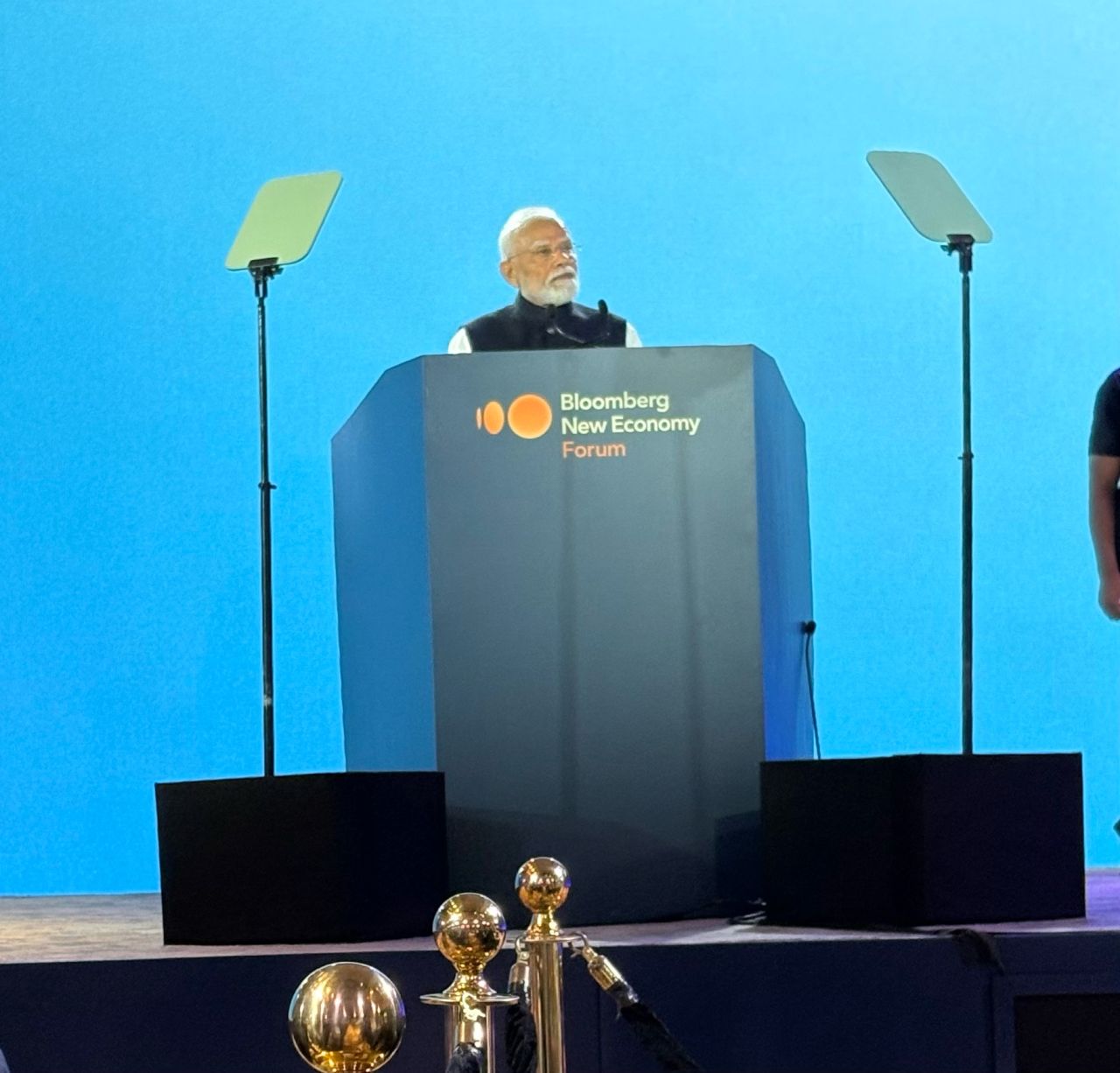
Kirsty reported on the presentation by Prime Minister Narendra Modi, leader of the world’s most populous nation and largest democracy. India’s population is about 1.48 billion, half the population is younger than about 30, and 23.8% are children under 15. Modi has led a government for 25 years, first in Gujarat and then as Prime Minister.
“Power to Empower” was Modi’s theme at the Forum, and his speech earned a standing ovation for its vision and delivery. His central idea is that power should make citizens capable, not dependent. India’s digital economy illustrates the point. Bank accounts, digital identity, and mobile phones now allow government payments to reach people directly, with less corruption. Modi reported that 250 million people have been lifted out of poverty in a decade. India has grown from a few hundred start-ups before 2014 to more than 250,000, about half of them in smaller cities and towns, and more than 45% with a woman director or partner. New talent, new solutions, and growth of 7.8% last quarter mean that India is now the world’s fastest-growing economy. Modi was equally clear about India’s role in the world: cooperation alongside competition, growth “with the world and for the world,” and AI developed responsibly for the benefit of all.
Two further conclusions follow for anyone working on India’s energy future. The first is progress. India met its Paris target of 40% non-fossil electricity capacity in 2021, nine years early, and renewable capacity has grown from about 75 GW in 2014 to about 300 GW today. The second is risk. The Prime Minister stated that supply chains, energy, minerals, payments, and technology, which once connected the world, are now instruments of pressure. With the Strait of Hormuz disrupted this year, India has felt this directly.
Terra Praxis’ assessment is that India’s next major step is firm, clean power: electricity available every hour, through nights, monsoons, and supply shocks, that cleans the air and is made in India. Every start-up, small business, and young person in Modi’s vision depends on it, as do critical industries, advanced manufacturing, and AI sovereignty. Terra Praxis’s REPOWER India study will show where to start. India’s 197 coal sites already have grid connections, water, land, and trained workforces. Repowered with nuclear plants designed for manufacture and assembly as products rather than one-off construction projects, using India’s own domestic reactor design, these sites could supply nearly 60% of the electricity India needs in 2070.
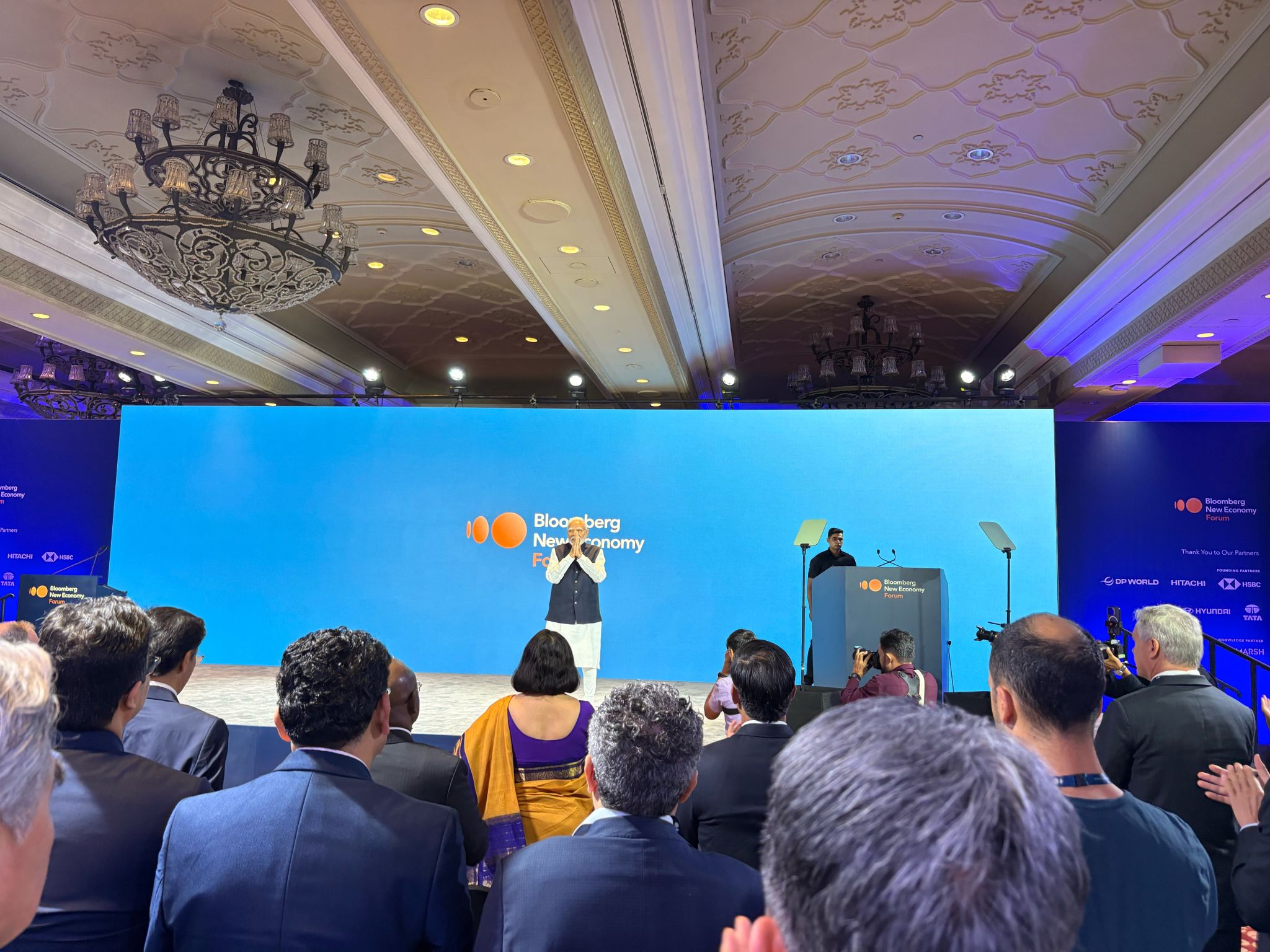
In 2025, Kirsty and Eric Ingersoll joined fellow global leaders at the 2025 New Economy Forum in Singapore (November 19–21, 2025). As Asia’s commercial and financial capital, Singapore offered a vantage point on a region that holds 75% of the world’s coal plants and the fastest-growing energy demand. There, Prime Minister Lawrence Wong, one of Asia’s most influential leaders, recognized the potential of small modular reactors to deliver emissions-free, secure, and reliable energy for land-constrained, energy-intensive economies—endorsing nuclear energy in Southeast Asia’s energy transition.
Learn more about the 2026 New Economy Forum.