
Energy Sovereignty at the Heart of Europe: Reflections on the Budapest Balkans Forum 2026
by Kirsty Gogan | Co-CEO, Terra Praxis | Managing Partner, LucidCatalyst
The Budapest Balkans Forum, hosted by the Hungarian Institute of International Affairs in March 2026, brought together ministers, special envoys, and senior policy leaders from across Central Europe and the Western Balkans for three days of intensive dialogue on geopolitics, EU enlargement, and regional security. I was honoured to be invited to speak in the closed-door workshop on Pathways Under Pressure: Diversification and Supply Security. What I encountered in Budapest was illuminating, challenging, and ultimately encouraging.
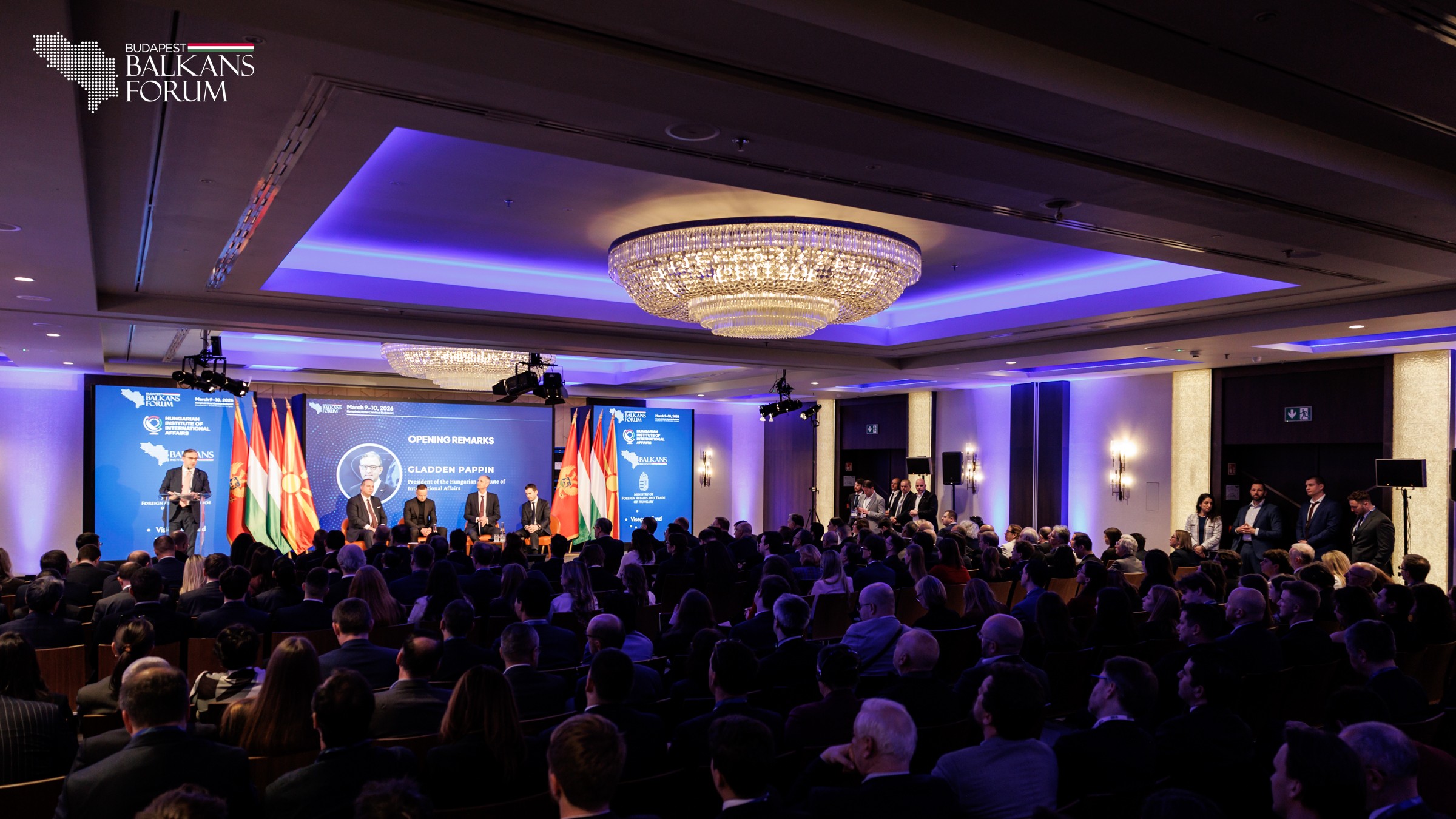
What I Heard
The opening panels on the first two days were dominated by a frustration that ran deeper than I had anticipated. Ministers from North Macedonia, Montenegro, and Bosnia and Herzegovina described, in vivid and personal terms, the asymmetry between what the European Union asks of Western Balkan candidate countries and what it offers in return. These are nations that have aligned with EU foreign and security policy, signed defence cooperation agreements, reformed their institutions, and in the case of North Macedonia, changed their national name and flag to satisfy accession requirements. Yet they remain in the accession waiting room, in some cases for over two decades, subject to the same trade tariffs as Russia and China.
One foreign minister drew a distinction that stayed with me throughout the forum. The challenge, he argued, is not euro-scepticism but euro-pessimism. The populations of the Western Balkans are pro-European. They have not turned against the EU. They have simply stopped believing the EU will deliver on its promises. That is a harder problem to solve, and it has direct consequences for energy policy: if countries lose faith that the European path will reward their efforts, the offers from Russia and China—gas infrastructure, pipeline deals, investment with no conditionality—become harder to resist.
I also heard, very directly, about the economic pressures facing these countries. Energy costs, industrial competitiveness, and the impact of tariffs are not abstract policy questions in this region. They are the daily reality for citizens and businesses. The slow progress on EU enlargement is not merely an institutional frustration; it is creating a geopolitical vacuum at the geographic heart of Europe—surrounded on all sides by EU and NATO members—that external actors are actively filling.
What the Data Shows
During the forum, I examined live electricity grid data for the countries represented in the room. The picture was stark. Carbon intensities ranged from 45 gCO₂/kWh in Albania, powered almost entirely by hydroelectricity, to 666 gCO₂/kWh in Kosovo, running on ageing coal plants that are among the dirtiest in Europe. Serbia stood at 356, Bosnia at 424, and Montenegro at 616 on a day when its hydropower was underperforming and coal was filling the gap. Meanwhile, Hungary—where we were sitting—registered 115 gCO₂/kWh, thanks largely to the Paks nuclear power station providing firm, clean baseload power.
These grids are deeply interconnected. Bosnia exports coal-fired electricity to Croatia. Serbia’s energy decisions affect the entire region. As the EU’s Carbon Border Adjustment Mechanism tightens, countries generating power at 400–600 grams per kilowatt hour will face a devastating competitiveness hit. The coal dependency that defines energy systems across the Western Balkans is not merely an environmental liability—it is an economic and geopolitical vulnerability.
What Emerged from Our Panel
I expected our panel on supply diversification and security to involve a debate between gas diversification and nuclear energy. That debate never materialised. Instead, all three panellists—alongside a Serbian energy law specialist and a Hungarian economic researcher—converged on the significant potential for nuclear energy in this region.
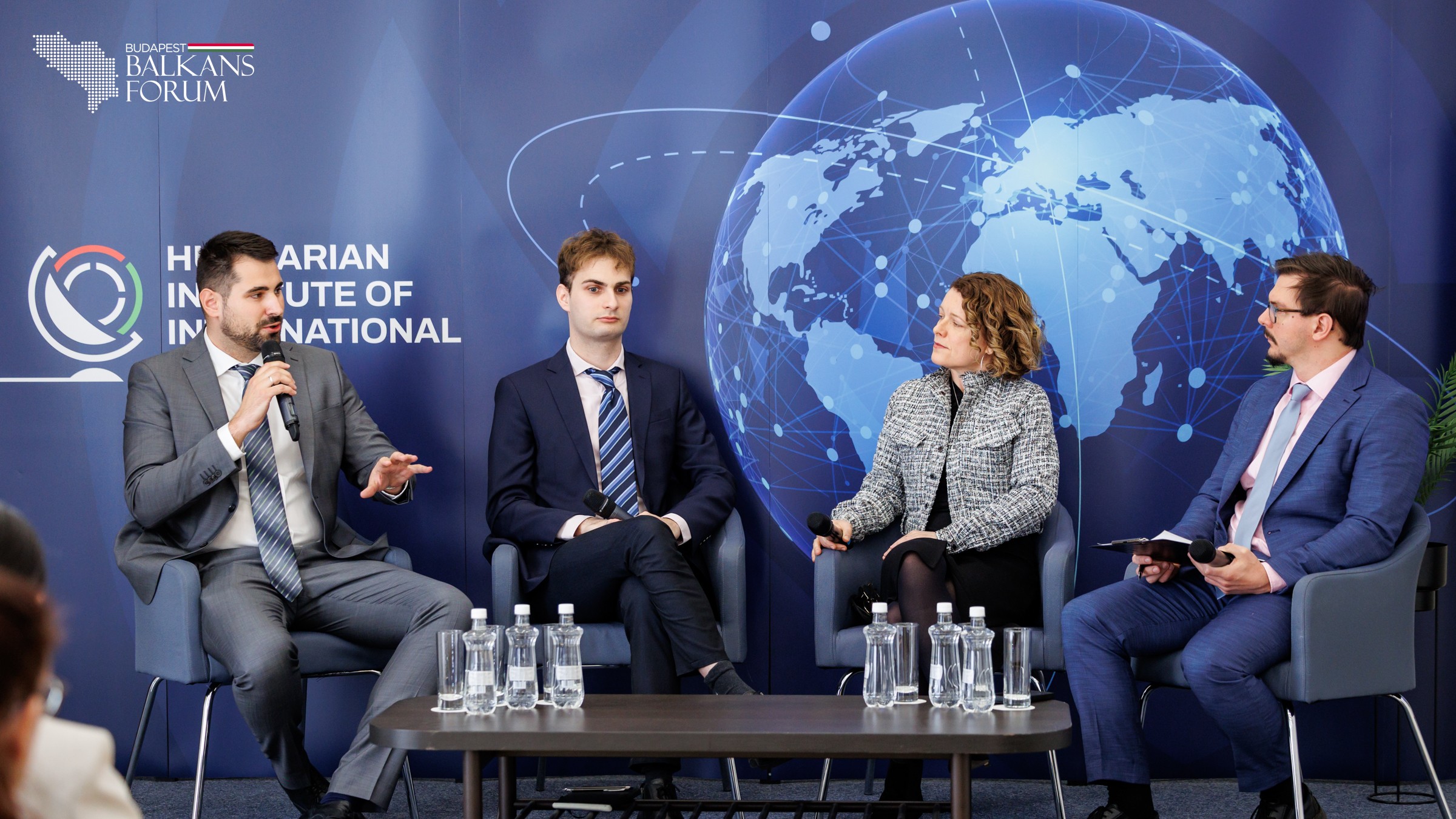
We discussed the practical pathways for repowering existing coal and industrial energy sites with advanced manufactured nuclear reactors: preserving grid connections, workforces, and communities while replacing the energy source. We explored how nuclear’s characteristics—energy-dense fuel that can be stored on-site for years, diversified supply from multiple friendly nations, independence from pipelines and shipping lanes—offer a form of energy sovereignty that gas diversification, however well-executed, simply cannot match.
The most productive part of the discussion centred on how small countries can overcome the institutional and economic barriers to nuclear deployment. The Nordic-Baltic cooperation model emerged as a compelling template: Finland, Sweden, Estonia, and Lithuania are pooling resources around regulatory harmonisation, joint procurement, and shared supply chain investment to create programmatic benefits that no single small nation could achieve alone. The Western Balkans—with their small grids, geographic proximity, and shared EU accession trajectories—are ideally positioned to replicate this approach.

The Wider Context
The forum took place against the backdrop of the worst global energy shock since the 1970s. The conflicts in Ukraine and Iran are simultaneously disrupting oil, gas, and LNG supply chains. The closure of the Strait of Hormuz has halted twenty million barrels per day of oil and interrupted a fifth of global liquefied natural gas supplies. These are not sequential crises; they are concurrent and mutually reinforcing.
For the Western Balkans, the message could not be clearer. Building new gas infrastructure—as several countries in the region are currently planning, in some cases with Russian and Chinese financing—is not energy diversification. It is a thirty-year lock-in to a different form of the same vulnerability. The alternative exists: manufactured nuclear energy deployed at existing industrial sites, offering firm, clean, domestically controlled power that does not depend on the foreign policy calculations of supplier nations.
What I Took Away
I left Budapest with harder questions as well as clearer convictions. The governance and institutional challenges facing several Western Balkan countries are real, and nuclear deployment demands strong regulatory capacity, transparency, and long-term policy continuity. Not every country in the region is ready today. But I was struck by how the EU accession process itself is building precisely the institutional capacity that nuclear requires—and by how nuclear deployment could in turn strengthen the case for accession by delivering on decarbonisation commitments ahead of membership.
Above all, I was struck by the appetite. The political will for a genuine energy transition—one that delivers sovereignty, competitiveness, and sustainability—may be more advanced in this region than the current policy frameworks reflect. What these countries need is not more lectures about resilience from Brussels, but credible technology partnerships and investment frameworks designed for their reality.
I am grateful to the Hungarian Institute of International Affairs for a superbly organised forum and for the opportunity to listen and learn in a room of perspectives I am not usually exposed to. The Western Balkans may be in Europe’s waiting room, but on energy, they have the chance to lead.